

All About the Polar Vortex!
Exploding Trees in the Cold?
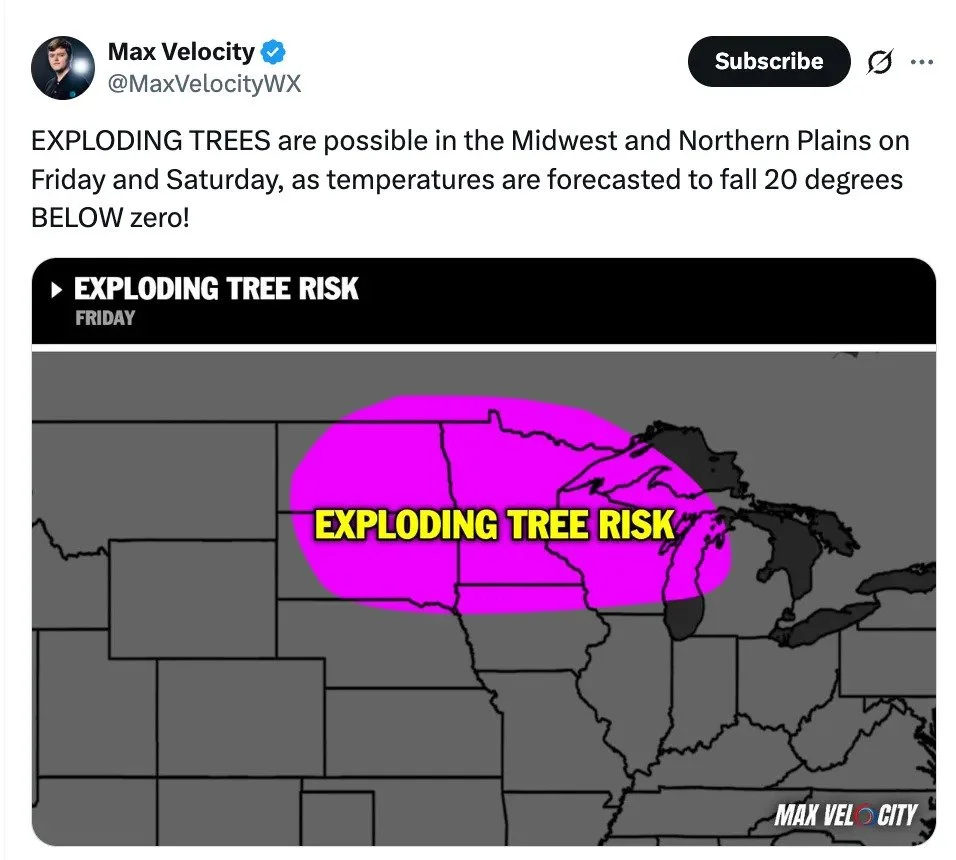
Because of Winter Storm Fern, meteorologists are warning that trees may explode due to frigid temperatures! What’s actually happening is that these trees (especially those with thin bark) are developing frost cracks, which are vertical splits that match the length of the tree truck and can sound like an explosion because they are so loud.
The sudden rapid freeze of water and sap in the tree can cause the expansion of the sap and water particles which causes physical pressure that leads to this “explosion” (1).
Winter Storm Fern has made its way down to the southern United States as an ice storm as a result of the Arctic Polar Vortex stretching.
What is the polar vortex?
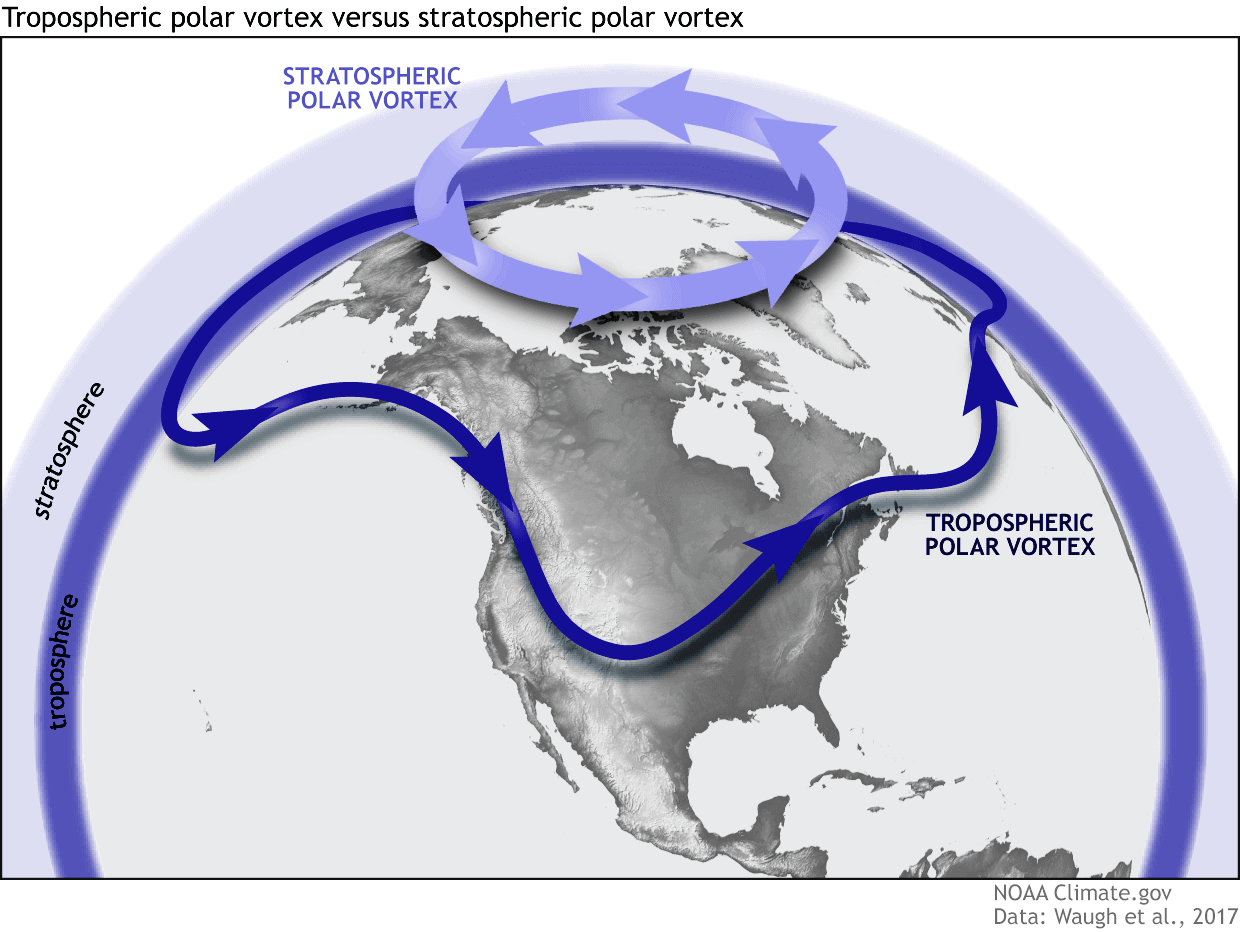
Polar vortex image from NOAA
The polar vortex is a big area of low pressure and cold air that surrounds the Arctic and Antarctic regions. Though it always exists around the north and south poles, it weakens in the hemisphere’s summer and strengthens during the hemisphere’s winter. Because the air flows in the counter-clockwise direction, it is known as a vortex. This is not a new weather feature and it is known to expand during the boreal winter in the northern hemisphere, sending cold air down with jetstream in North America (2). In the past, it has affected Canada, the United States and Europe.
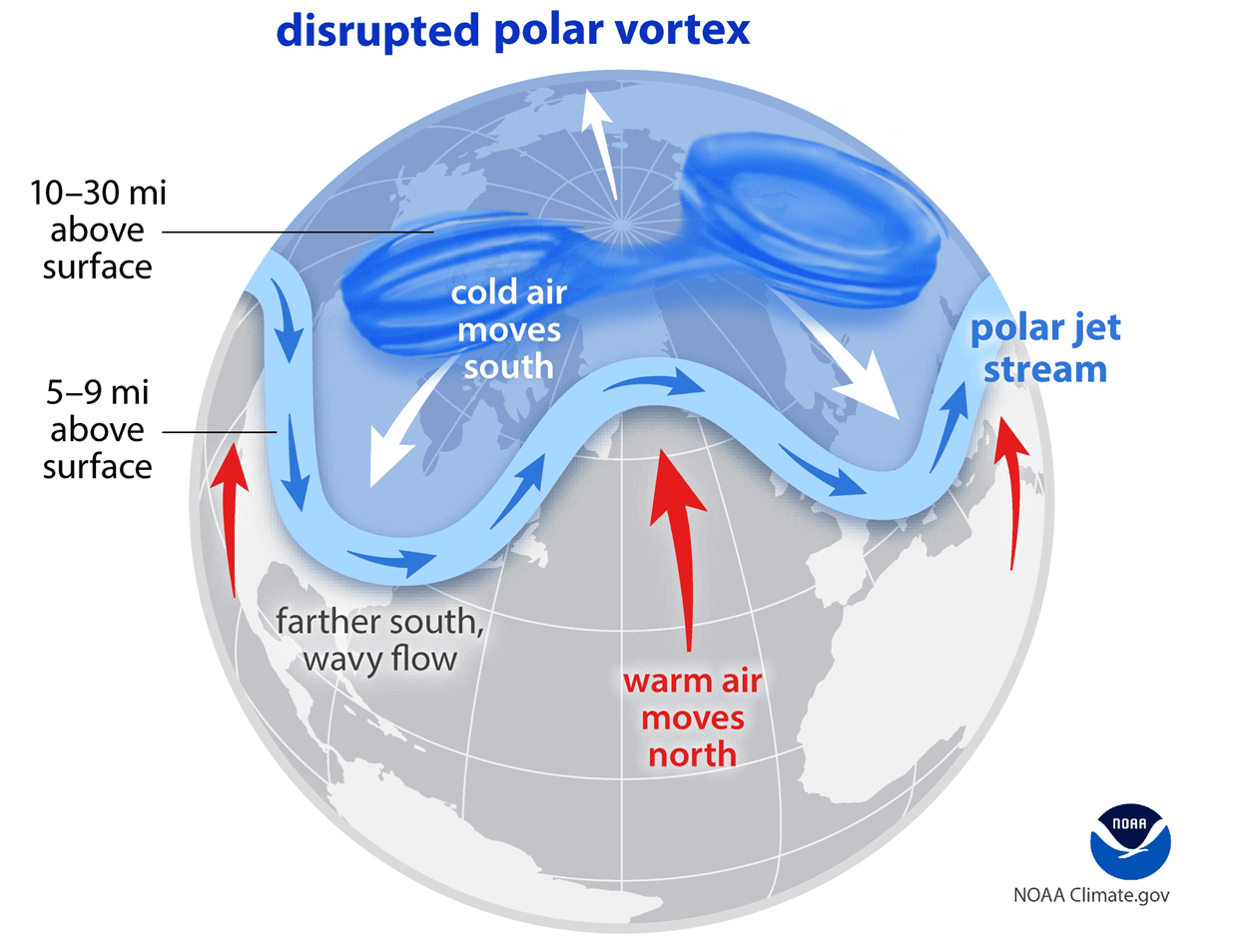
Disrupted Polar Vortex image from NOAA
The polar vortex is found in the layer of the atmosphere we live in, the troposphere, and the layer just above it, the stratosphere. When there is a collapse of the stratospheric polar vortex possibly due to sudden warming, this can lead to disruption and then latitudinal shifts in the tropospheric polar vortex along the polar jetstream (3). This is why the cold air from the poles moves further south (4).
What about Winter Storm Fern?
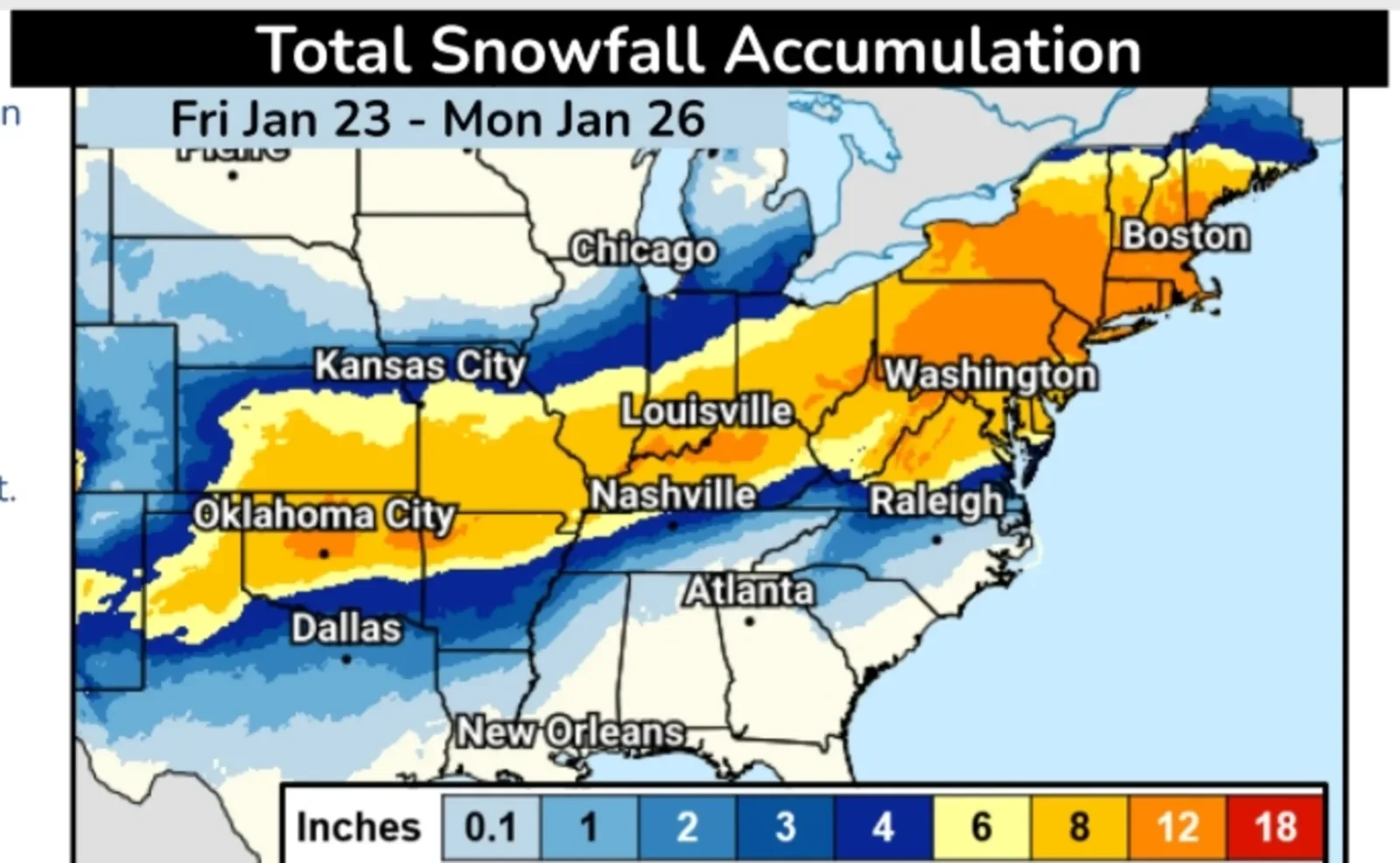
A snowfall map from the NWS Weather Prediction Center for Winter Storm Fern. Image from https://www.newsweek.com/winter-storm-warning-map-2026-snow-forecast-fern-11410313
This historic winter storm is bringing Arctic ice and heavy snowfall to two thirds of the eastern United States and its weather could continue into early February (5). Record temperature lows, heavy snowfall, major ice accumulations (that can damage trees and cause power outages) and its enormous scale all add to the significance of this storm (6)! In addition to Fern, another polar vortex collapse may lead to cold temperatures in the first half of February for Europe, Canada and the United States (7), but we will have to wait and see.
How is extreme cold related to global warming?
When we see historic events that lead with the stratospheric polar vortex that end in historic weather events like Winter Storm Fern, we note that this is not a normal occurrence even though polar vortex events are not abnormal. One of this magnitude and with record temperature is though.
Despite this, more research needs to be conducted on how the frequency of sudden stratospheric warming may be impacted by climate change since we know that stratospheric cooling increases with tropospheric warming (8). Additionally, there are disputing claims about where climate change will lead to more frequent cold spells. In a 2021 study, scientists have found a link between climate change and cold spells related to the stratospheric polar vortex (9). But there needs to be more research on this because there have been milder winters in the northern hemisphere during the hottest years and there may not be a link to extreme cold temperatures and climate change (10).
With more understanding, scientists can find answers for how all Arctic warming related to atmosphere, ocean and glacial melt will continue to impact the climate and how climate change may impact the Arctic and possibly less frequent winters in the northern hemisphere.
